
VHIP (Rental Rehab)
Vermont Housing Improvement Program 2.0 (VHIP2.0)
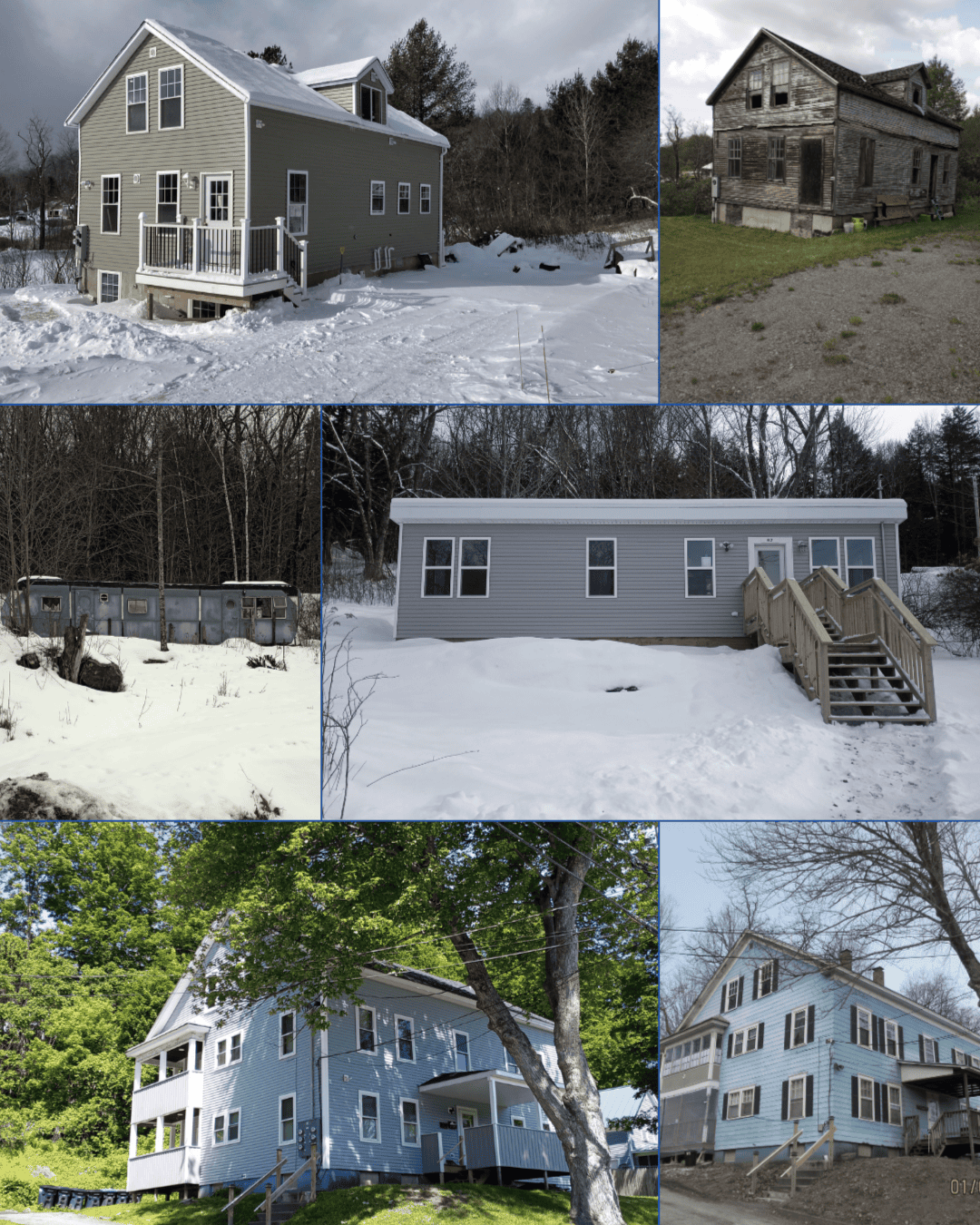
VHIP 2 is primarily a reimbursement program that works with private property owners to create or rehab rental housing stock across Vermont through forgivable loans of either five or ten-year terms. These homes, including accessory dwelling units (ADUs) and multifamily rentals will be leased at an affordable rate for at least 5-10 years depending on the funding structure. Windham & Windsor housing Trust administers this program in Windham and Windsor Counties. For more information about the statewide program visit the VHIP 2.0 page. To learn about how to apply in Windham & Windsor counties, program compliance, and more information, please review the information provided below.
Questions? Give us a call on that VHIP Inquiry Line: (802)246-2126
The VHIP 2.0 eligibility/application submission period will re-open on a rolling basis starting September 1st, 2026 until funds are exhausted. Links to the applications and where to upload completed files are at the bottom of the page.
Windham & Windsor Housing Trust’s Role
- Review and equitably evaluate all applications received from property owners and award funding that maximize State of Vermont goals for VHIP 2.0
- Ensure accountability for property owners receiving funds
- Attend an initial site visit of the property/units with Property Owner and/or Contractor(s) to review proposed scope of work and budget,
- Verify that all permitting and compliance with local, state, and federal regulations are satisfied
- Verify that signed contracts are in place that allow work to be complete and apartments leased by the deadline
- Prepare, collect, and record signed, notarized Covenants, Grant Agreements, and required legal loan documentation
- Conduct ongoing site visits (3 minimal) to inspect repair work during the project and distribute grant payments upon milestone completion
- Collect and reconcile receipts, checks, and/or paid invoices for the 20% match requirements, and other contracted work necessary to obtain a state occupancy permit
- Conduct final inspection to ensure all required contracted work has been completed and is ready for final DFS building inspections
- Verify compliance with all permit and program requirements
VHIP 2.0 is a competitive program. Applications will be reviewed for completeness within 15 days of being submitted and returned if incomplete. All applications will be scored using scoring criteria as detailed below.
Scoring Criteria include: Shovel ready status, geographic location, applicant past performance, number of units/bedrooms, unit type, length of vacancy, community need, critical or urgent life or safety situations.
Those applications which do not meet the basic criteria will be declined, and the applicant will be notified.
Funding Award Timeline
VHIP 2.0 funds are disbursed as reimbursement for verified expenses at specific milestones throughout the project. Applicants will need the capital to cover these expenses upfront. To receive reimbursement for the work on your VHIP 2.0 unit, you must submit invoices or receipts documenting the expenses. Sweat equity contributions must be properly documented and billed at appropriate hourly rates.
To be eligible, a property owner must:
- Submit a complete Application. A complete application includes the following:
-
-
- All pages of the eligibility form (see below for specific form),
- A scanned non-photo copy of the “Recorded Warranty Deed with Schedule A”
- an up-to-date tax bill,
- proof of insurance,
- W9 of the owner on the deed (person or entity) with mailing address,
- a scope of work.
-
- Meet on site with WWHT Representative to review project scope
- Provide a 20% match per grant. You can match the program funds in several different ways. You can pay for the expense out-of-pocket, apply for a loan to cover the match requirement. Expenses incurred before the signing of the forgivable loan agreement will not be considered eligible toward the match requirement (or for reimbursement), with the exception of some pre-development costs.
- Pre-development costs, including permitting or zoning fees, hiring an engineer/architect, etc., may be eligible, as long as there is documentation of the work and the work was completed after the application was submitted.
- WWHT requires financial documentation as evidence that any outstanding balance can be covered
- Sign a Housing Affordability Covenant outlining a commitment that all affected units must be rented at or below HUD “gross” Fair Market Rents for the appropriate County – which include utilities or rent reduction based on HUD’s “utility allowance” guidelines – 5 year or 10 year forgivable loan options are available.
- Have no Vermont or Federal tax liens or be delinquent on property taxes, sewer/water, or building be in foreclosure.
- Property owners are responsible for obtaining all permits and contracts and submitting copies to WWHT
- Property owners must be willing to submit all necessary receipts throughout the project using the format stated in the Materials invoice document provided by WWHT
- To be eligible for a VHIP 2.0 Funding Award you must watch this video Fair Housing Video and take a short quiz:
https://www.cvoeo.org/fair-housing-training-for-landlords
Current HUD FMR figures for 2026 Windham and Windsor Counties are calculated annually. This chart lists the maximum rents considered affordable by apartment type. Find the Fair Market Rent calculator worksheet here
Program Compliance
- Property owners need to submit an annual Form to Department of Housing and Community Development annually to show rental rate verification, and are responsible to notify DHCD of any changes to property status
- If property is sold or transferred the rent stabilization agreement stays with the property
For five-year term only:
- For more detailed information visit the ACCD VHIP Webpage. The property manager agrees to work with homeless service organizations to find suitable renters exiting homelessness for at least 5 years, or with USCRI to find refugee households to rent the unit for a period of five years after the original Occupancy is granted
- Property owners are asked to use the Common Rental Application for expedience. If a tenant is not available through the homeless service organization, after recorded due diligence has been attempted, beginning prior to the completion of the project, and for a period of 30 days after all required state inspections have been passed and a DFS Certificate of Occupancy has been granted, a property owner may petition WWHT for other possible rental options; A waiver for the first round of leasing may be granted at the discretion of the DHCD to determine appropriate tenancy options.
How to Get Started-
- Reach out to a contractor to get an estimate of the feasibility and cost of your project
- Once you have determined your project is feasible and affordable, you should reach out to your town Zoning/Planning board to learn about any town requirements regarding set-backs, water/sewer, change of use restrictions, and any other zoning and/or planning limits that might be in the by-laws of the town. (if you don’t have a contractor see link below)
- If, after a conversation with the town, you are ready to move ahead with your project, and would like to be approved for a VHIP grant you should complete a WWHT application (if you are located in Windham or Windsor Counties)
VHIP 2.0 eligibility/application submission period will run from Sept 1st on rolling basis
Applications are fillable PDFs specific to project type. Uploaded files automatically send directly to our VHIP files for review. Applications will be accepted on a rolling basis from Sept 1st until funding is exhausted.
Questions? Please contact us at (802)246-2126
Other information and resources:
- Building Permits are at The State Department of Fire Safety Regional office websites: regional office
- DFS Vermont State Building Codes: Vermont Code here,
- Find your local Health officer here to discuss your plan: local Health Officer.
- Learn more about renting in Vermont from the Champlain Valley Of Economic Opportunity (CVOEO): https://www.cvoeo.org/fileLibrary/file_212.pdf
- Vermont Rental Housing standards: minimum rental housing standards
- dfs_codesheet_state permits poster.pdf