
Windham & Windsor Housing Trust has a guiding vision: that all people in Southeastern Vermont have a home they can afford — homes that are safe, sustainable, and part of vibrant neighborhoods where everyone feels a sense of well-being, connection and belonging.
But as the region’s housing crisis deepens, WWHT and its community partners are increasingly confronted by the gaps in that vision — not only the shortage of affordable homes for people with low and moderate incomes, but also the absence of housing options for individuals whose needs extend beyond affordability.
“We’re seeing so many gaps in the housing ecosystem,” says Elizabeth Bridgewater, WWHT Executive Director. “The need is tremendous, and for some community members, there are simply no options at all.”
In ongoing collaborative work with One Brattleboro — a local coalition of organizations and leaders working together on upstream solutions to community challenges — and local community engagement, WWHT has helped surface two critical areas of unmet need: stable, affordable, and supportive homes for individuals with developmental disabilities, and safe, recovery housing for individuals who are healing from substance use disorders.
Together, these represent two segments of our community that are deeply underserved in the current housing landscape — yet whose needs for stability and support are essential to long-term community well-being.
“There’s broad community recognition that these gaps exist,” says Bridgewater. “Now we’re coming together to figure out how to fill them.”
A New Phase for Holton Home
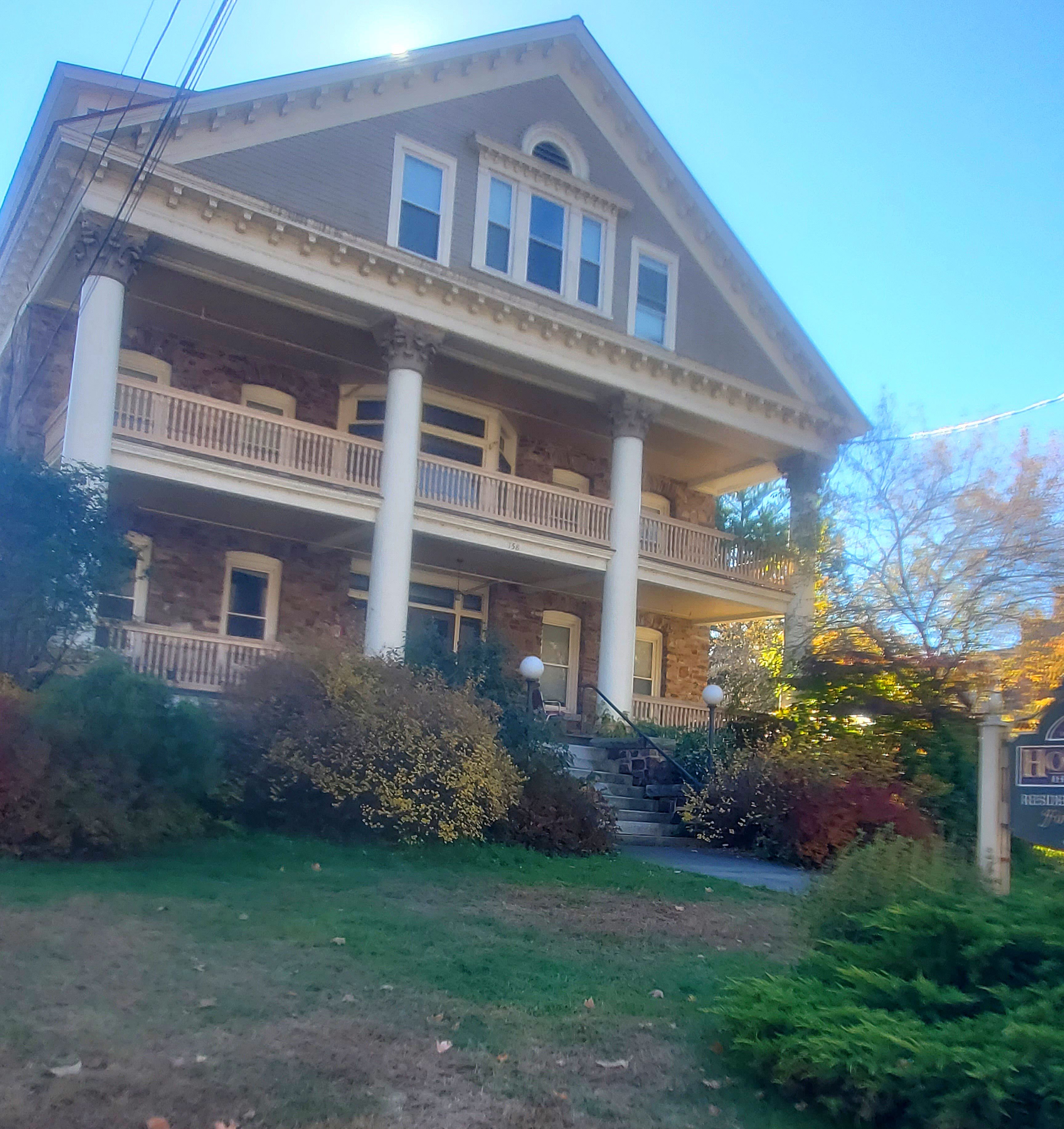
In the heart of Brattleboro, the historic Holton Home has stood for more than a century as a place of care. Chartered in 1892, it served generations of older Vermonters as an assisted living home. Now, Windham & Windsor Housing Trust is shepherding this beautiful, historic building into a new phase: adaptively repurposing the building into 21 permanently affordable apartments. The redevelopment focuses on the interior of the building, shifting the current layout of 36 bedrooms into two studios, seven one-bedrooms, eleven two-bedrooms, and one three-bedroom apartment – offering a range of housing options for different family sizes and needs while preserving the exterior.
What makes the project especially meaningful is that up to five of these apartments will be set aside for individuals living with developmental disabilities, through a collaboration with Black Mountain Assisted Family Living. For these residents, the project will offer not just a home, but supported space with shared living providers within a neighborhood that’s walkable, welcoming, and connected.
WWHT recently received funding from the Vermont Housing and Conservation Board to advance the project, which has been named a state priority under Act 186. Passed in 2022, the law supports the creation of new housing models for people with intellectual and developmental disabilities, emphasizing community-based, person-centered living options.
Jenny Hyslop, Housing Director with VHCB has been engaged in the statewide work around this gap in housing, “In our work with individuals with developmental disabilities and their families, we know that there is an unmet need for as many as 600 homes around the state to house this population. Many individuals live with parents who are aging and are deeply concerned about what comes next for their adult sons and daughters. WWHT’s re-envisioning of Holton Homes creates an opportunity for individuals to live within a vibrant community, with access to appropriate services, in a setting that is dignified and supports autonomy.”
For families, especially aging parents of adults with disabilities, this project offers a deep sense of relief from knowing that their children will have a long term, safe and supported home into the future.
“Our sole mission is to provide permanent housing for people with developmental delays at an affordable rate.” Shares Peter Case, board President of Black Mountain Assisted Family Living, “Collaborating with Windham & Windsor Housing Trust, who deeply understand the importance of accessible, affordable housing, allows us to create lasting homes that offer dignity, stability, and true community connection for those we serve.”
Beyond the bricks and mortar, Holton Home represents something deeper — the chance to preserve the heart of a place that has always cared for people, while ensuring it continues to do so for generations to come.
Planting Seeds for Recovery Housing
While Holton Home represents a tangible step forward, efforts to establish recovery housing in the region remain in the exploratory stage — but with growing energy and shared commitment.
Across Southeastern Vermont, there’s a growing recognition that people in recovery need more than just treatment.
“It is impossible to overstate the importance of a safe and stable environment for individuals in early recovery” Explains Elias Burgess, Director of Turning Point of Windham County, Recovery and Wellness Center, “Many people who have taken the difficult first steps of their recovery journey find themselves unable to break free of their previous living situations and social networks. Recovery housing provides an invaluable bridge between the life they are trying to leave behind and the life that they know is possible. Decades of research have proven that access to recovery housing not only greatly increases the likelihood of long-term sobriety, but also leads to a number of positive secondary outcomes such as decreased arrests, increased employment, and improvements to mental health.”
That gap has sparked new energy within One Brattleboro, where a working group — including WWHT’s Executive Director Elizabeth Bridgewater — is exploring what recovery housing could look like here.
“We’ve seen a keen need for this in our community,” says Bridgewater. “Right now, there are zero options for people in recovery who need safe, stable housing as part of their healing journey. We as a community need to change that.”
The group is studying models from across the state — including Jenna’s Promise and the Vermont Foundation of Recovery — both of which offer supportive, sober, peer-based environments where residents can regain stability and purpose.
“The Town sees recovery housing as a clear community priority.” John Potter, Brattleboro Town Manager explains, “Stable, supportive housing is essential to long-term progress and community well-being. What’s really encouraging is how local partners are coming together to work on solutions — this is the kind of collaborative energy that One Brattleboro is generating in our town, and it is fantastic.”
While no site or operating partner has yet been identified, the shared sentiment is clear: even one small recovery home, with six to eight beds, would be far better than the current absence of options.
“This is about taking the first step,” says Bridgewater. “Every person deserves a chance and option to heal and belong. And a home free from substances is where that starts for many people.”
Moving Forward
As WWHT and its partners continue to explore new and targeted solutions, the organization remains grounded in its mission: to create homes and communities where everyone — regardless of income, ability, or circumstance — can thrive.
These conversations, and the projects that follow, reflect a deep understanding that housing is more than shelter. It’s stability, inclusion, and opportunity — the building blocks of a healthy and connected community.
By building homes that welcome people of all abilities, and by exploring housing that supports recovery and wellness, WWHT continues to help shape a Southeastern Vermont where every neighbor has a place to call home — and a community that believes in them.
