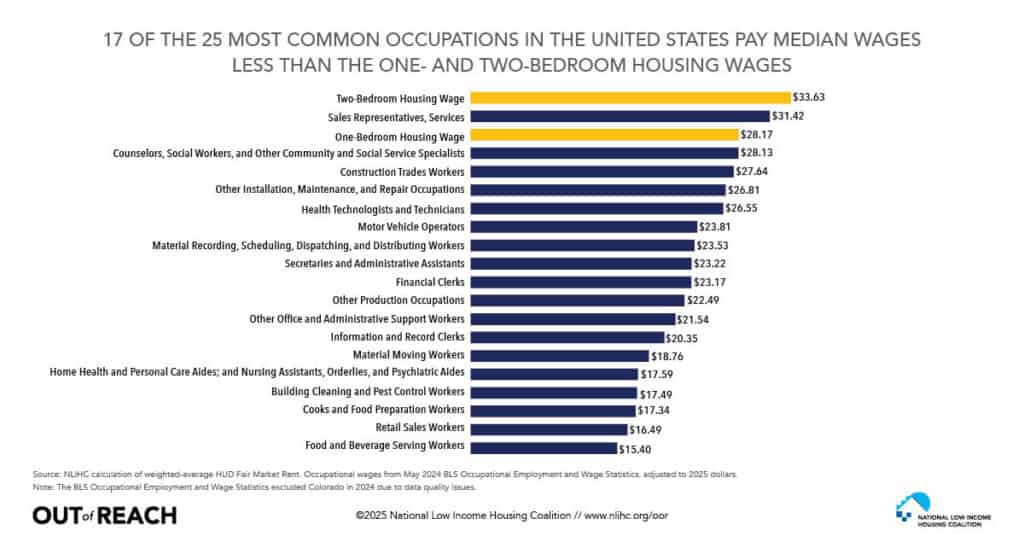

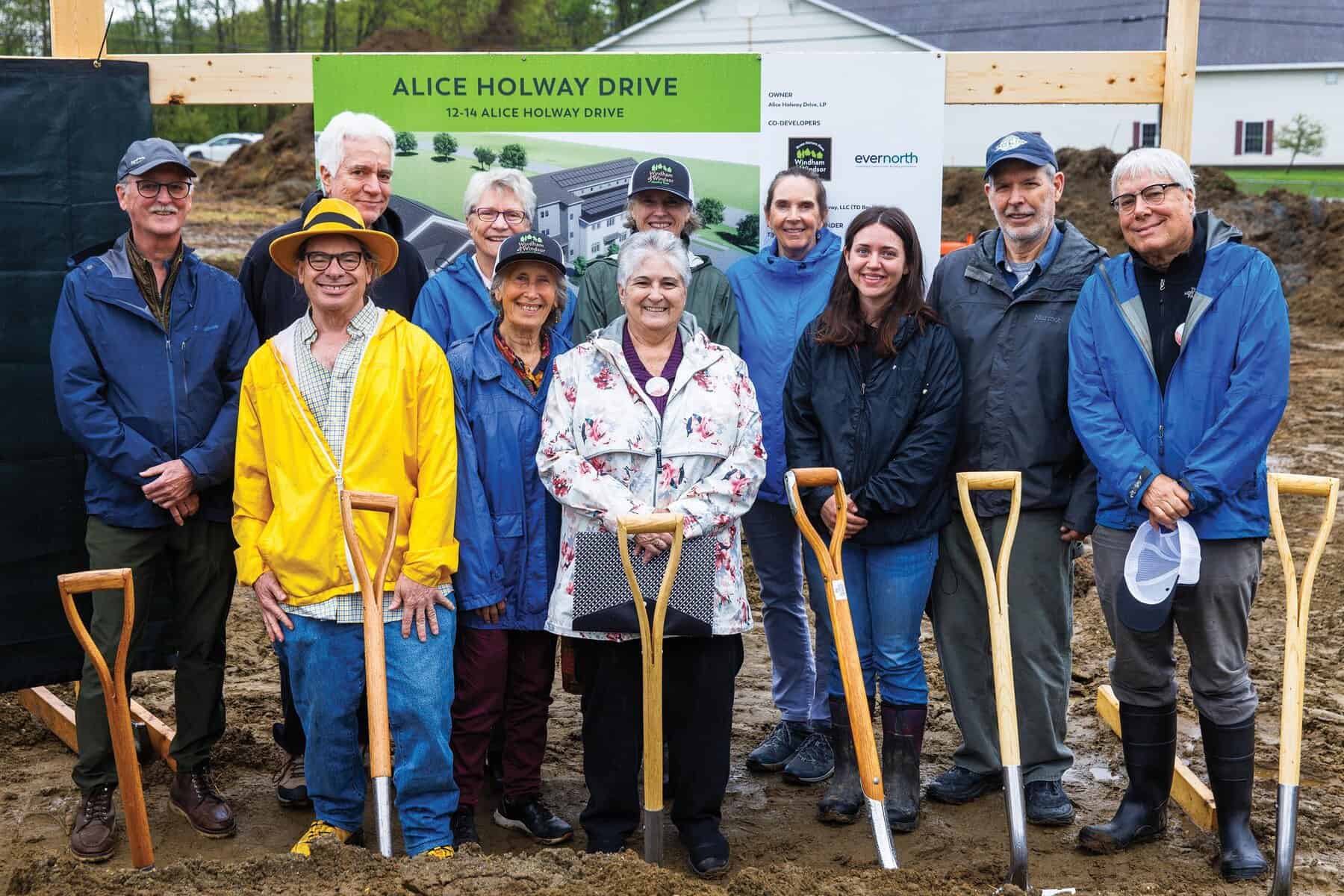
Leo Schiff (pictured in yellow above), new board chair for Windham & Windsor Housing Trust, put this letter out in response to the recently released Out Of Reach Report by the National Low Income Housing Coalition. Find the Vermont State data here.
The National Low Income Housing Coalition’s newly released Out of Reach report offers a sobering reminder of the growing disconnect between wages and the cost of rent in Vermont—and across the nation. It confirms what we experience every day in our work at Windham & Windsor Housing Trust: that hardworking Vermonters, seniors, people with disabilities, and caregivers simply cannot afford the cost of a safe, stable home without support.
According to the report, there is no county in the United States where a full-time minimum wage worker can afford a modest two-bedroom rental home at fair market rent. Here in Windham and Windsor Counties, the wage needed to afford such a home is $26 (Windham) and $25 (Windsor) per hour, while the average renter earns far less. The result is that many households are spending more than half of their income just to keep a roof over their heads. That leaves so many in our community dangerously close to crisis—one car repair, medical bill, or missed paycheck away from eviction or homelessness.
These are not abstract statistics. These are real people: working families, elders on fixed incomes, single parents juggling multiple jobs, and individuals with disabilities. Many cannot work full-time or at all, and the supports they rely on—rental subsidies, housing vouchers, and other lifeline programs—are now facing massive proposed federal cuts. Without action, the affordability crisis will deepen, and more of our neighbors will be pushed to the brink.
This is why WWHT’s work to develop and maintain permanently affordable housing is more critical than ever. With the recent completion of Central and Main in downtown Windsor, we now have over 900 affordable apartments, and 147 Shared Equity homes across Windham and Windsor counties, and have 95 more either under construction or in development. Every project is designed with the long-term in mind: built to last with high-efficiency systems, renewable energy where possible, and universal accessibility. We often carry out environmental remediation to safely reuse downtown land, contributing to smart growth and sustainability.
What makes our approach unique is that affordability doesn’t expire after 15 or 20 years, as it often does in other states. Our housing remains affordable forever. That means families who move in today—and those who come after them—can count on having a safe, stable home they can afford well into the future. That’s how we preserve economic diversity in our communities, protect people from displacement, and ensure public investment continues to pay off for decades.
These developments are not easy. They are highly complex and often financially daunting. But that’s why nonprofits like WWHT exist—to step in where the market won’t, and to deliver lasting impact. Our developments are made possible through innovative public-private partnerships. About 60% of our funding comes from private investment, primarily through the Low Income Housing Tax Credit program. The remaining 40% is made up of state and federal dollars. These modest public investments leverage millions in private funds—and in return, communities gain long-term housing assets that generate property and school tax revenue each year.
Permanently affordable housing isn’t just a response to crisis. It’s a promise—to today’s Vermonters and the generations to come—that our communities will remain places where everyone can belong, contribute, and thrive.